The mountain demands
a plan.
Upload your route GPX and instantly generate a complete race strategy. We calculate terrain-adjusted pacing, personalized fueling schedules, and drop bag logistics — before you cross the start line.
Everything you can plan before the start line — in one place. No spreadsheets, no screenshots of the race rules buried in your camera roll.
Aid stations, intermediate cutoffs, and the overall time limit — laid out along the distance, not buried in a 40-page PDF.
Gels, water, drop bags — tied to your ETA at every aid station. Carbs per hour, not guesswork.
A checklist built from this specific race's rules. Zero surprises at gear check.
A database of races with profiles, terrain, and rules — pick your next start from data.
Segments, grade and surface — pace computed for every climb and descent.
Garmin: planned pace, distance to the next aid station, and your gap to plan — right on your wrist.
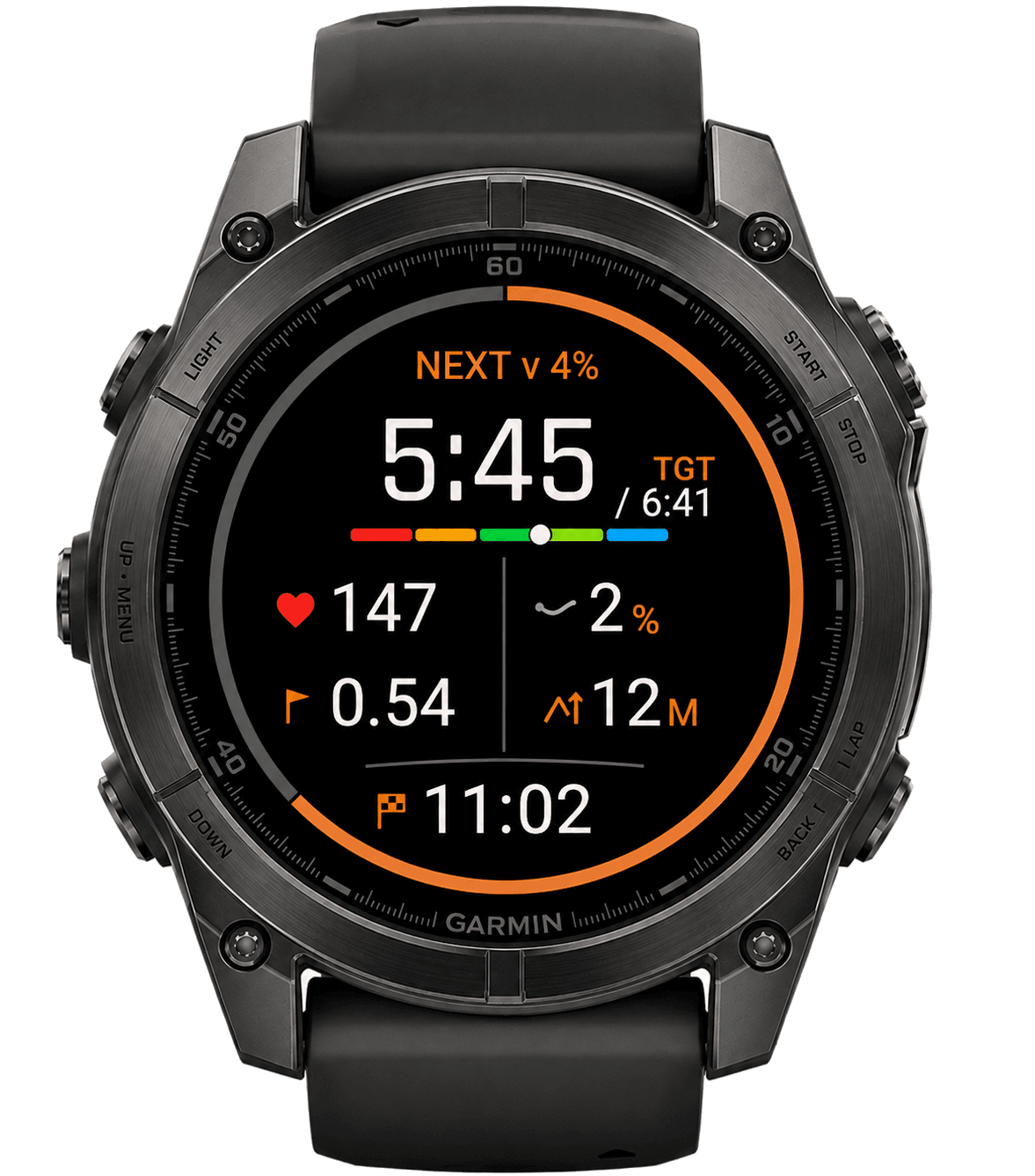
The route is split into climb, descent, and runnable flat segments, each with its own grade and surface. The screen always shows six key metrics:
Plus a plan for every checkpoint from the race rules: what to eat, what to grab from your drop bag, how many minutes to stop — your watch reminds you when you get there.
The model accounts for how every percent of grade affects pace, the surface type, and the fatigue drift in the late kilometers. The forecast isn't one number — it's a confidence interval that narrows as the race goes on. And crucially: the model reads your own past races and training — the forecast is calibrated to your profile, not an "average runner."
Recalculated at every checkpoint — on this route (Zegama), the window is already ±6 minutes by km 30.
Segments, grade, duration
No account needed
Checkpoint plan, fuel and drop bags
Kit checklist from race rules
Lifetime access to this plan
No subscription